
Start here
Planning adviceShoreTiles Beginner Guide: A Safer Starting Layout
- Treat every placement as permanent; do not spend a tile merely to make the shoreline look even.
- Build one dependable coin-producing cluster before opening several distant fronts.
- End the day by checking routes from exposed coast tiles back toward the lighthouse.
On this page
Start compact and make every daytime purchase serve one of three jobs: earn the next coins, keep military coverage connected, or preserve a clean edge for later tiles. Placement is permanent, nights keep returning, and a larger island creates more coast to defend, so early symmetry matters less than a short, legible defense route.
Plan the first day as one complete cycle
Planning checklist, not a tested build order. Tick items as you inspect your run; checks reset when you reload.
Example decision: a match or a longer island?
If a farm can join another farm but extends a thin arm, compare the displayed coin reward with the new coast you would need to cover. The match is documented; choosing the placement is planning advice. Without verified ranges or a view of your run, neither option is guaranteed to be safer.
- Read the offered tiles before committing the first open edge.
- Prefer placements that can connect to another useful tile without creating a narrow detached pocket.
- Reserve enough attention for defense; a beautiful economy that cannot be covered is still a failed layout.
Use a compact starting shape
Compact starting area
Consider keeping early growth together so you have fewer separated areas to watch.
A stretched extension
Before extending outward, check how defenders would reach the new edge.
Dashed lines suggest routes to inspect, not verified unit paths. Shapes are illustrative: no tile dimensions, defense range, exact build order, or guaranteed result is implied. Check the tiles and routes in your run.
A compact island shortens the distance between economy, camps, and the lighthouse. The official material warns that expansion creates more ground to protect, which makes a thin arm or isolated patch a real commitment rather than free space.
Before the light changes
- Confirm which edge is hardest to reach with your current units.
- Check whether the next economic tile completes a same-type or same-colour match.
- Avoid adding coast unless its income, defense, or progression value justifies another approach path.
See the game, not just the sketch
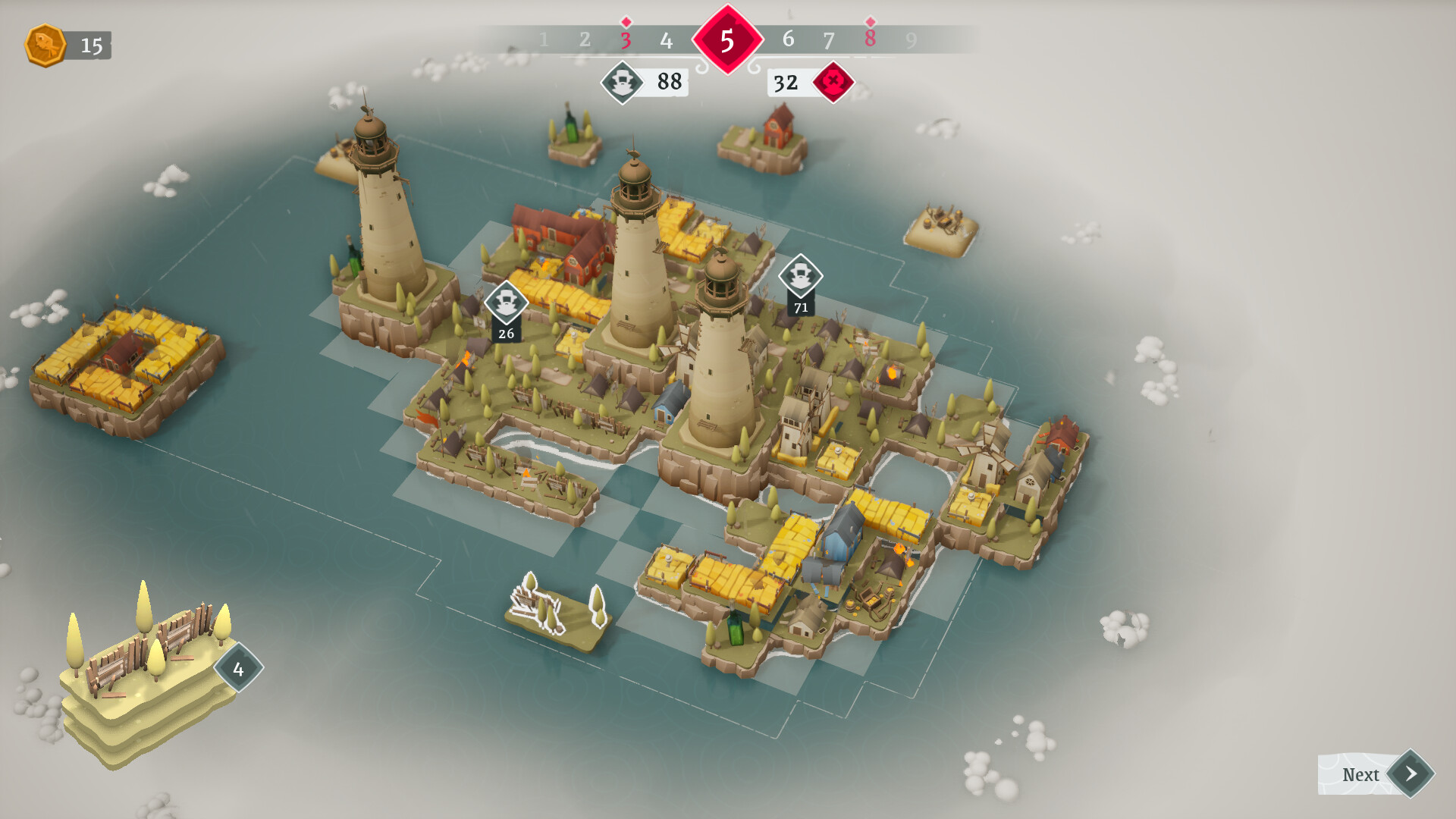
Watch the gameplay explainer linked by the developer ↗
The developer linked this video in the pre-release “Demo Translations Are Now Live!” announcement. Use it for visual context, not proof of current numerical values. We have not verified a frame-by-frame test or a complete release-build control map. Material links checked September 5, 2026.
How we checked this advice
Facts, reports, and limits
Official factTile placement is permanent and drawn sequences vary between runs.ShoreTiles on Steam · ShoreTiles official announcements
Official factPlayers buy tiles from a trader and prepare the island during the day.ShoreTiles Is Out Now — developer announcement · ShoreTiles official announcements
Advice / limitsThe compact opening is a conservative planning rule, not a published best build.ShoreTiles on Steam · ShoreTiles Is Out Now — developer announcement
References
Sources for this guide
- ShoreTiles on Steam ↗official · checked 2026-09-04
- ShoreTiles Is Out Now — developer announcement ↗official · checked 2026-09-04
- ShoreTiles official announcements ↗official · checked 2026-09-04